The Indian Premier League (IPL) continues to dominate global cricket, and the 2026 edition promises to be one of the most commercially and competitively significant seasons in recent years. With major sponsorship deals, security reforms, and impactful player movements already making headlines, IPL 2026 has started shaping up long before the first ball is bowled.
In this blog, we break down the key updates, schedule expectations, squad news, controversies, and what fans should watch out for.
IPL 2026 Start Date & Scheduling
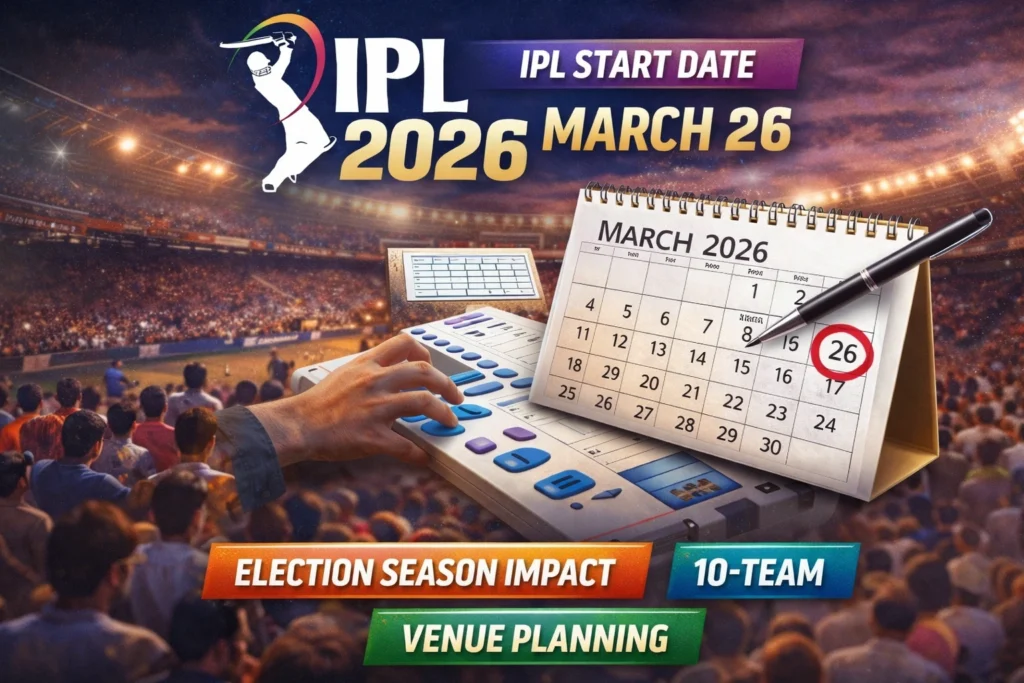
The 2026 edition of the Indian Premier League (IPL) is set to generate unprecedented anticipation, not only for cricketing reasons but also for its logistical and scheduling complexity. According to early reports and discussions within the cricketing ecosystem, the IPL 2026 season is expected to begin around March 26, 2026. While the official schedule from the Board of Control for Cricket in India (BCCI) has not yet been publicly issued, multiple signals suggest that the tournament window will remain consistent with the traditional March–May period utilized in recent years.
A key factor shaping the scheduling this year revolves around the electoral calendar in several Indian states, which often overlaps with the IPL window. Similar circumstances have historically influenced venue selection, match clustering, and security deployment during previous editions. For example, earlier seasons saw matches being shifted between cities or consolidated in fewer venues to align security bandwidth with election-related responsibilities. As a result, the BCCI is reportedly working closely with relevant state authorities, police departments, and election commissions to ensure smooth operational planning.
Despite these challenges, stakeholders across franchises, broadcasters, and fan communities expect the tournament to maintain its standard 10-team format, which has become a commercially valuable structure since its adoption. With ten franchises, the league format typically involves a double round-robin structure before progressing to the playoff stage, resulting in more than 70 matches. Broadcasters favor this expansive schedule due to increased advertising slots, viewer engagement opportunities, and sponsorship inventory, while franchises benefit from expanded home game opportunities and greater fan turnout.
Venue allocation is another major topic tied to the scheduling conversation. In 2025, several stadiums underwent safety audits following crowd management incidents. The most notable case involved the M. Chinnaswamy Stadium in Bengaluru, which faced temporary restrictions before receiving clearance for IPL 2026 after the implementation of enhanced surveillance solutions and crowd flow protocols. This reinforces the expectation that stadium fitness and compliance standards will directly influence the final match distribution in the 2026 calendar.
On the international cricket calendar, the IPL 2026 window appears relatively favorable, with no conflicting ICC global tournaments scheduled during the same period. This reduces player withdrawal risks and allows franchises to retain core overseas talent for the duration of the season. Player availability remains a critical consideration for the BCCI and franchise leadership teams, as it shapes auction strategies, squad balance, and overseas recruitment campaigns.
From the fan perspective, the scheduling announcement is typically one of the most awaited pre-season milestones. Ticketing platforms, fantasy gaming operators, travel companies, and hospitality chains all depend on confirmed dates for operational planning. As soon as the BCCI releases the official fixture list, a surge in demand is expected across multiple commercial layers connected to the IPL ecosystem.
In summary, while the final schedule announcement is pending, all indicators point to a late-March start with a full-length competitive calendar, backed by coordinated planning between cricket authorities, state agencies, and commercial stakeholders
Teams Participating in IPL 2026
The Indian Premier League 2026 season will feature the same ten franchises that have competed since the league’s expansion era. These teams continue to represent major metropolitan markets and regional cricketing ecosystems across India, contributing not only to competitive quality but also to commercial growth, fan loyalty, and player development. The participating franchises are:
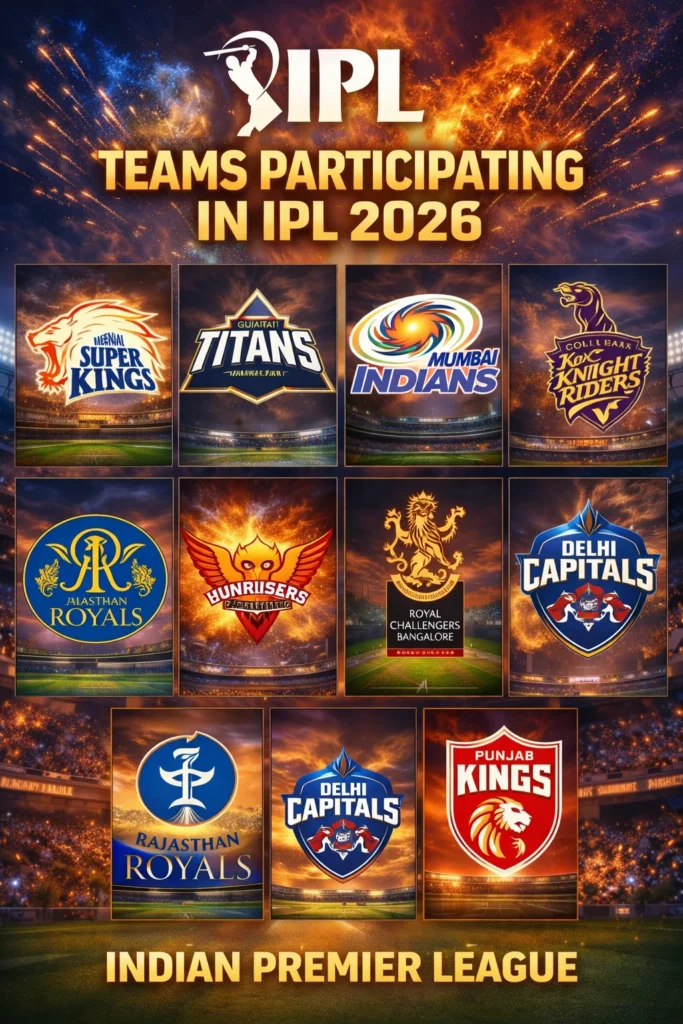
- Chennai Super Kings (CSK)
- Mumbai Indians (MI)
- Royal Challengers Bengaluru (RCB)
- Kolkata Knight Riders (KKR)
- Rajasthan Royals (RR)
- Gujarat Titans (GT)
- Delhi Capitals (DC)
- Sunrisers Hyderabad (SRH)
- Punjab Kings (PBKS)
- Lucknow Super Giants (LSG)
Each franchise enters IPL 2026 with its own strategic narrative. Some are pursuing rebuilding cycles, while others are reinforcing established cores with emerging Indian talent and experienced overseas professionals. The auction cycle for the 2026 season showcased this dynamic, as several high-value transactions and targeted acquisitions revealed how teams are planning to adapt to evolving T20 cricket demands.
From a competitive standpoint, Mumbai Indians and Chennai Super Kings remain the benchmark franchises given their historical trophy counts, operational consistency, and scouting depth. However, newer teams like Gujarat Titans and Lucknow Super Giants have shown that competitive parity is now a structural feature of the IPL ecosystem rather than a seasonal anomaly. These clubs have built sophisticated talent pipelines, data-driven selection frameworks, and strong leadership appointments.
Royal Challengers Bengaluru, despite their elite fanbase and strong brand equity, continue to pursue their first IPL title—a storyline that fuels significant audience engagement every season. Rajasthan Royals, on the other hand, continue to blend youth development with overseas leadership roles, leveraging analytics-based squad formation that has drawn industry attention. Kolkata Knight Riders and Sunrisers Hyderabad are entering IPL 2026 with renewed tactical direction following major personnel and coaching revisions in 2025, indicating that both franchises are targeting medium-term stability rather than pursuing short-term overhaul cycles.
On the northern front, Delhi Capitals and Punjab Kings remain unpredictable yet structurally improving units. Both sides have invested in younger Indian batting cores complemented by powerplay seam options and spin depth—two critical components of modern T20 roster construction. While consistency remains a challenge, both franchises displayed promising indicators in the previous auction phase.
From a business perspective, all ten teams maintain strong franchise market value with diversified revenue streams across sponsorship, merchandise, digital fan engagement, hospitality, and fantasy cricket partnerships. Their regional footprints also influence attendance patterns, stadium upgrades, and brand partnerships during IPL 2026.
Beyond on-field competition, the presence of ten franchises enhances content volume for digital broadcasters and fantasy platforms, increases ticketing inventory, and strengthens fan acquisition across geographies. With no immediate expansion team announcements from the BCCI for 2026, the ten-team structure remains optimal in balancing commercial upside with logistical feasibility.
Overall, the confirmed participation of these ten franchises sets the stage for a deeply competitive and commercially robust IPL 2026 season that aligns with the league’s long-term strategic roadmap.
Major Sponsorship & Commercial Developments
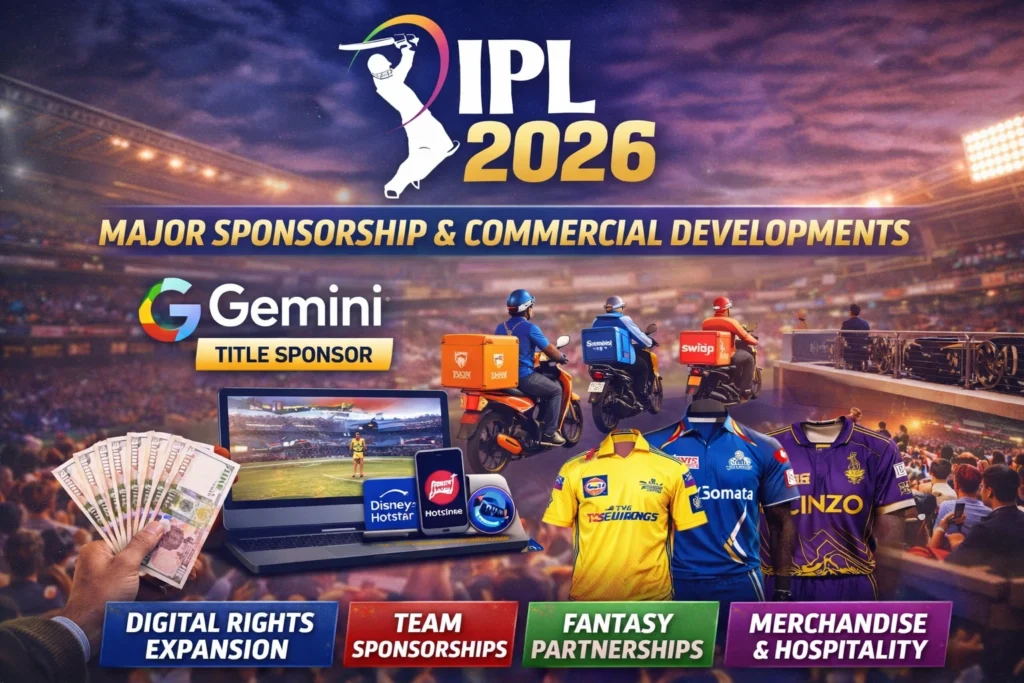
Beyond cricketing narratives, one of the defining aspects of IPL 2026 is the scale of its commercial ecosystem. The Indian Premier League has long been positioned as one of the world’s most valuable sports properties, and the 2026 season reinforces that status through new partnerships, technological crossovers, and diversified revenue streams.
The most notable commercial headline is the confirmation of a new lead sponsorship agreement between the BCCI and Google’s AI platform Gemini, estimated at approximately ₹270 crore over a multi-year period. This deal signals a broader shift in IPL sponsorship interests, reflecting how global technology companies increasingly view cricket as a strategic entry point into India’s digital consumer base. Gemini’s involvement also adds a competitive dimension to the commercial story, as rival AI platforms and digital ecosystems continue to invest heavily in sports, advertising, and real-time content delivery.
At the franchise level, sponsorship structures remain robust. Team jerseys, sleeve positions, helmet logos, digital backdrops, and LED board inventories have seen aggressive bidding, driven by brands in categories such as fintech, fantasy gaming, logistics, education technology, fast-moving consumer goods (FMCG), and automotive. Noteworthy is the sustained presence of fantasy gaming operators and betting-adjacent analytical platforms, which leverage IPL’s massive engagement window to drive user acquisition and retention. With continued regulatory scrutiny in certain states, these partnerships are now evolving toward data-driven fan engagement models rather than purely promotional messaging.
Broadcasting continues to anchor IPL’s commercial machine. With consumption moving from traditional satellite to OTT streaming, digital rights holders have expanded multilingual feeds, commentary panels, smart data overlays, and interactive features such as watch-along rooms and fantasy dashboards. For IPL 2026, rights holders are expected to deploy even more advanced analytics layers, including real-time win probabilities, bowling impact metrics, and personalized feed recommendations influenced by user behavior. Such features boost watch time metrics and enhance monetization via tiered subscription models and ad performance optimization.
Merchandising, once a secondary revenue stream, has matured considerably. Franchise stores, mobile pop-ups, and online merch platforms saw sizable growth during the 2025 cycle, particularly in metro markets and through youth segments. IPL 2026 is expected to expand this with broader licensing strategies, international shipping partnerships, and limited-edition capsule drops tied to marquee matches and rivalry weekends.
Hospitality and ticketing are also scaling. Premium hospitality boxes, corporate packages, VIP lounges, and stadium club memberships have seen increased demand from enterprise clients, especially in Mumbai, Ahmedabad, Bengaluru, and Chennai. With stadium infrastructure investments progressing, BCCI and state associations are aligning on fan experience upgrades including digital turnstiles, e-ticketing, cashless concessions, and improved security protocols.
Overall, IPL 2026 underscores how the league is no longer purely a sports tournament but a multi-layered commercial platform intersecting technology, entertainment, advertising, merchandise, hospitality, and digital commerce. The sponsorship environment remains extremely competitive, and the 2026 cycle is on track to surpass previous benchmarks across multiple revenue categories.
Stadium Infrastructure & Safety Improvements
Another major pillar of IPL 2026’s pre-season narrative involves stadium infrastructure and safety enhancements across multiple venues in India. The league’s growth over the past decade has not only increased fan turnout but has also raised expectations around stadium design, comfort, digital experience, and crowd security. IPL 2026 therefore enters the calendar with a renewed emphasis on improving spectator facilities and operational risk management following the lessons of the previous season.
The most notable case centers around the M. Chinnaswamy Stadium in Bengaluru, which faced scrutiny after a crowd stampede incident in 2025. In response, Royal Challengers Bengaluru (RCB) collaborated with state officials to propose a ₹4.5 crore AI-powered surveillance and crowd monitoring system. This system integrates entry-point tracking, congestion mapping, emergency pathway analysis, and real-time alerting for security personnel. After these measures were approved alongside reinforcement of ground logistics and evacuation infrastructure, Karnataka authorities granted the stadium clearance to host IPL 2026 and subsequent international fixtures. This outcome set a precedent for technology-enabled stadium compliance across other venues.
Other major venues including Wankhede Stadium (Mumbai), Narendra Modi Stadium (Ahmedabad), Eden Gardens (Kolkata), and Chepauk (Chennai) are also undergoing upgrades, though on varying scales. Enhancements cover multiple categories including:
- Turnstile modernization and digital ticketing
- Emergency exit pathway optimization
- Perimeter fencing and crowd channelization
- Accessible seating zones for differently-abled fans
- Improved restroom and concession facilities
- Cashless payment support for F&B kiosks
- High-density Wi-Fi zones for digital engagement
These upgrades align with the evolving profile of IPL spectators, who increasingly consist of families, business groups, tourists, and corporates rather than just traditional cricket audiences. Stadium hospitality infrastructure—especially VIP boxes, corporate lounges, and pitch-view dining suites—has also seen heightened investment, driven by premium hospitality demand from enterprise clients during marquee fixtures.
On the regulatory front, state cricket associations and stadium management authorities are collaborating with municipal bodies to standardize compliance related to fire safety, capacity certifications, public health, and emergency medical support. The deployment of ambulance stations, medical response centers, cardiology kits, and heat stress management equipment is becoming more standardized, given India’s climate variability during the March–May window.
Digital infrastructure is emerging as another overlooked but critical component of modern stadium operation. High-capacity mobile networks and public Wi-Fi are increasingly essential for fantasy gaming participation, in-seat ordering, social media sharing, and real-time broadcasting. For broadcasters and content teams, improved connectivity also supports drone camera coordination, player mic feeds, and instant replay data streams.
Overall, the infrastructure agenda surrounding IPL 2026 signals a broader shift: the league is evolving from merely hosting matches to delivering an integrated entertainment and hospitality experience. The push for tech-enabled operations, safe crowd management, and premium in-stadium services not only improves fan satisfaction metrics but also increases ticketing revenue, sponsorship value, and broadcast synergy.
Stadium Infrastructure & Safety Improvements
Stadium infrastructure and spectator safety have become strategic priorities ahead of IPL 2026, especially following rising attendances and heightened expectations around fan experience. The league is no longer viewed purely as a sporting event but as a multi-layer entertainment property, which places greater emphasis on stadium functionality, safety, and digital enablement.
The most discussed infrastructure story involves the M. Chinnaswamy Stadium in Bengaluru, which underwent significant assessment after a 2025 crowd incident. To retain its IPL hosting rights, Royal Challengers Bengaluru (RCB) partnered with state authorities to implement a ₹4.5 crore AI-enabled stadium surveillance and crowd analytics system. The system enhances entry-exit management, monitors congestion in real time, and provides emergency alerting capabilities. With these upgrades approved, the stadium received clearance to host IPL 2026 matches.
Other major IPL venues—including Wankhede in Mumbai, Narendra Modi Stadium in Ahmedabad, Eden Gardens in Kolkata, and Chepauk in Chennai—are focusing on improvements related to:
- Digital ticketing and turnstile upgrades
- Emergency exit and evacuation planning
- Cashless concession counters
- Wi-Fi and connectivity enhancement
- Accessible seating infrastructure
The hospitality segment is also expanding, driven by increasing demand from corporate clients and premium spectators for VIP boxes, viewing lounges, and curated matchday experiences.
Overall, these developments reflect the league’s shift toward modern, tech-enabled, safety-compliant stadium operations, ensuring IPL 2026 can support higher footfall, improved fan satisfaction, and better event management outcomes.
Broadcast & Digital Ecosystem
The broadcast economy of IPL remains one of the strongest in global sports. Key trends expected in 2026 include:
- Higher digital viewership than television
- Enhanced multilingual streaming
- Fantasy gaming integrations
- Branded AI analytics overlays
- Increased micro-subscription revenue models
OTT services are expected to carry major traffic spikes particularly during playoffs and marquee fixtures like MI vs CSK and RCB vs KKR.
Fan Expectations & Cultural Impact
Ahead of the season, fan narratives are already active around:
- Whether CSK can rebuild post-transition
- Whether MI can reclaim dominance
- Whether RCB can finally secure their first IPL trophy
- Whether new-generation stars can outshine veterans
The league continues to serve as:
- a talent pipeline for Team India
- a commercial showcase for global brands
- a cultural festival for cricket audiences
Early Predictions & Talking Points
Key macro talking points include:
- Emerging Indian pacers could define the season
- Spin value remains high on slower tracks
- Death-overs specialists remain premium assets
- Team balance may outweigh star power
Conclusion
IPL 2026 is shaping up to be one of the most anticipated and commercially aggressive editions of the tournament so far. With scheduling updates, political optics, security reforms, sponsorship deals, and squad moves already dominating the headlines, the stage is set for another season of elite cricket entertainment.
Fans now await the final schedule and opening ceremony announcements from BCCI, after which full build-up toward the opening fixture will begin.